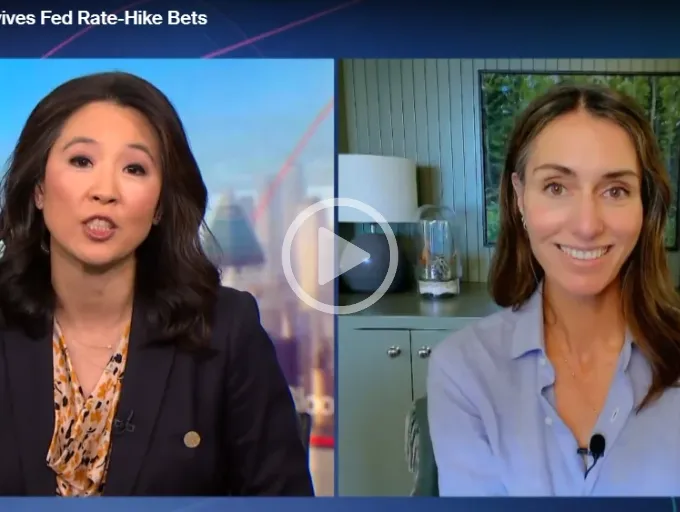
Julie Biel, CFA, Chief Market Strategist, joined Bloomberg TV’s The Close for an extended conversation on the implications of a major leadership shakeup at NVIDIA and what it could reveal about the broader AI trade. From the durability of AI spending and growing use of leverage to market concentration and the influence of high-profile executives, Julie looks beyond the immediate headlines to consider where risks and opportunities may be shifting.
The Midas Touch Can Cut Both Ways
Julie notes that when a CEO becomes closely associated with a company’s success, the downside of that dependence can be steep. While domestic demand for advanced chips may remain strong, questions around international revenue, supply, pricing, and national security introduce new uncertainties for businesses throughout the AI ecosystem.
Could Slower AI Spending Improve the Economics?
A slowdown in the pace of AI capital spending would not necessarily undermine the long-term opportunity. Julie considers whether less frequent model training and a more measured investment cycle could improve free cash flow and allow companies to use AI more profitably rather than continually racing to fund the next technological frontier.
Leverage Is Changing the Risk Equation
Julie sees rising leverage as an important distinction between the current stage of the AI cycle and its earlier phases. Greater reliance on debt, including less visible off-balance-sheet obligations, can make the ecosystem more fragile and raises questions about how sustainable current spending levels may be.
Looking Beyond Concentrated AI Exposure
Rather than treating the market as independent from the AI trade, Julie emphasizes understanding how closely businesses and portfolios are correlated with it. She points to companies with durable business models that could remain strong even if AI capital expenditures slow, including mega-cap technology businesses whose underlying competitive positions extend beyond current spending trends.
Moving Beyond the “Cult of Personality”
As AI becomes more consequential across the economy, clear communication and less dependence on individual personalities could help investors focus on the economics and execution behind the technology.
Watch the full interview to hear Julie Biel’s complete perspective.
Recorded on November 11, 2026